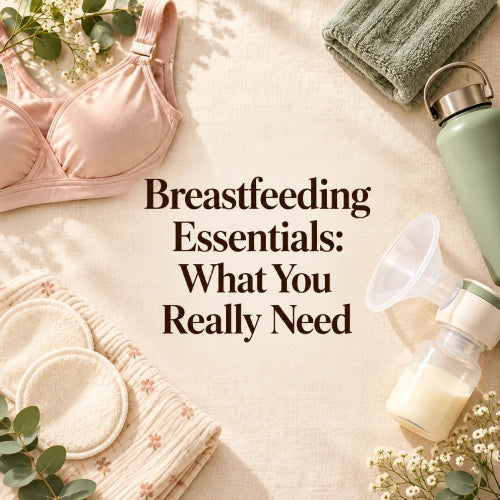
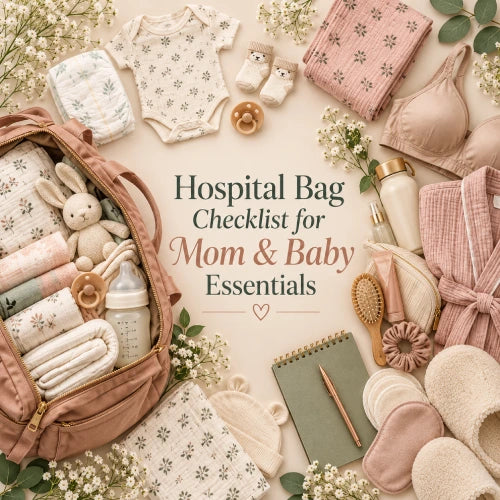
Welcome to the beautiful and messy reality of motherhood. It is a phase of life that is absolutely stunning but also incredibly overwhelming. We know that as a new mom, you may be feeling anxious and figuring out which breastfeeding essentials you really want. Let’s be honest, nobody warns you how many baby products will call themselves “must-haves.” Walk into any baby store, and you’ll find a variety of products such as breastfeeding pillows in five different shapes, a wall of nipple creams, and breast pumps that connect to apps. At that moment in time, you're just staring at the products and thinking What should you buy?.
Take a deep breath; we've got your back. If you are feeling exhausted by the endless checklists. Let’s simplify. When it comes to breastfeeding essentials, you don’t need a mountain of complex gadgets. You just need the true essentials: comfortable options like Ultra Soft Wireless Nursing Bras, a solid fix for leaks and sore skin, a giant water bottle within arm’s reach, and a trusted special one to call when things get heavy. Keep it simple. You need this
We made this guide together for moms to help you strip away the noise. We are breaking down the essentials, calling out the pricey gadgets you can safely skip at the store, and giving you realistic advice that protects both your time and your pocket.
Quick Summary
-
Skip cute but uncomfortable bras and go with stretchy ones, in addition to tops, leak pads, and a large straw water bottle.
-
Buy nursing gear between 35 and 37 weeks to avoid shopping with a newborn on your chest.
-
Take a class, save a lactation consultant's number, check insurance, and determine night duties with your partner ahead of time.
-
Managing regular leaks and irritations with breathable pads, simple balms, and heated or chilled compresses as needed.
-
Picking up a hands-free pumping bra, getting the right size flange, and learning about milk storage guidelines if going back to work
What Breastfeeding Essentials Should Be On Your List?
Fewer than you think. If you're nursing directly at the breast, the true basics fit in one drawer and one basket. Everything else is a bonus.
The 11 true basics:
-
Two to three soft, well-fitting nursing bras
-
A sleep bra or soft bralette for nights
-
box of nursing pads (disposable or washable)
-
A nipple balm or lanolin cream
-
A large reusable water bottle, ideally one you can open with one hand
-
Three or four tops or pajamas with easy breast access
-
At least six burp cloths (you'll want more, trust me)
-
Something to support your arms and baby, whether that's a nursing pillow or bed pillows you already own
-
One-handed snacks within reach
-
10. The number for a lactation consultant or breastfeeding support line, saved in your phone before birth
-
Hot and cold breast packs for engorgement in those first swollen days
That's it. Honestly, if I could only tell a pregnant friend one thing, it would be number ten. Gear helps, but a good latch helps more.
Essential vs Optional
|
Item
|
Essential if...
|
Can wait if...
|
|
Electric breast pump
|
You're back to work, your baby is in the NICU, or you're just going to use regular bottles
|
You're nursing at home with no bottle plans yet
|
|
Pumping bra
|
You pump more than once a day
|
You pump only occasionally
|
|
Nursing pillow
|
You've had a C-section or have a long torso
|
Regular pillows support you fine
|
|
Nursing cover
|
You want extra privacy in public
|
A scarf or loose top works for you
|
|
Milk collector
|
You leak heavily on one side while feeding on the other
|
Leaking is light or manageable with pads
|
|
Bottle warmer
|
Rarely truly needed
|
Almost always; warm water in a bowl works
|
Notice the pattern? Comfort and leak control come first. Equipment comes second, and only when your actual routine calls for it.
Nesting Mode: 6 Breastfeeding Essentials to Grab Before Baby Arrives
Gathering your nursing essentials somewhere between 35 and 37 weeks pregnant makes a world of difference. You get things ready before you're running on two hours of sleep with a newborn attached to your chest, and your body has mostly settled into its late-pregnancy shape.
Pre-baby prep isn't about clearing out the baby aisle. It’s about surviving the first two weeks. That period is a non-stop cycle of nursing every two to three hours, figuring out a proper latch, and recovering from birth. Here are six essentials to have ready before your hospital bag is packed.
1: Nursing Bras
Pick up two or three soft nursing bras near the end of your pregnancy. Once your milk comes in, usually a few days after giving birth. Your boobs are going to swell again. Stick to super stretchy, wire-free styles that give you plenty of room to grow. You can save the structured, fancy bras for about six weeks down the road and your milk supply will settle down.
2: Clothes That Give Easy Access
Before you run out and buy a whole new wardrobe just take a look in your closet. You might already have exactly what you need, and you don’t have to spend too much money by buying the same clothes again. Button-down shirts, wrap tops, and loose V-necks are perfect for nursing moms. A Maternity Dress Nursing Nightgown can also provide comfortable breastfeeding access, alongside soft pajamas and a couple of nursing tops you’ll practically live in during those first few weeks.
3: Nursing Pads
Don’t panic if you do or don't start leaking early. Everybody is on their own timeline. Some moms need breast pads before delivery, and others don't leak until their milk officially comes in. To keep things stress-free, throw a box of disposable pads or a few pairs of soft, washable fabric ones into your shopping cart. You will be glad you have them tucked in your drawer just in case.
4: Heavy-Duty Water Bottle
Breastfeeding triggers intense thirst, often the second your baby latches. An open glass on your nightstand is a spill waiting to happen. Get a large water bottle with a straw or flip lid so you can open and drink it with one hand.
5: Prenatal Class and Professional Contacts
The most valuable prep work doesn't cost much, but it saves hours of stress:
-
Take a prenatal breastfeeding class, either in person or online.
-
Find a local International Board Certified Lactation Consultant (IBCLC) and save their number in your phone right now.
-
Call your health insurer to ask about coverage for a breast pump and lactation visits. Most plans are required to cover breastfeeding equipment and counseling.
6: Support Plan With Your Partner
Sit down with your partner or support person before labor starts. Work out a clear plan for who handles burping, diaper changes, and refilling your water bottle during late-night feeds.
Sorting through insurance paperwork or hunting for a lactation consultant on day four with sore nipples and a crying baby is exhausting. Ordering supplies through insurance can take a couple of weeks to process, so get those tasks checked off early.
Comfortable Nursing Bras and Breastfeeding-Friendly Clothing
If there's one category where spending a little more pays off, it's this one. You'll wear these pieces for months, often around the clock.
Nursing bras
A good nursing bra does three jobs: supports heavier breasts, opens with one hand, and doesn't press anywhere it shouldn't. That last part matters more than people realize. Tight bands and underwire can put pressure on milk ducts, and many lactation consultants suggest avoiding anything too snug in the early weeks.
Look for:
-
Wire-free construction, at least for the first six weeks
-
One-handed clips (drop-down cups) or soft pull-aside styles
-
Stretchy, breathable fabric that adapts as your size changes between feeds
-
A wide, comfortable band that doesn't dig in when you're sitting curled over a baby
Pumping bras
A pumping bra holds your flanges in place so your hands are free. If you plan to pump daily, it goes from luxury to necessity fast. Many moms prefer a hybrid style that works as both a nursing and pumping bra, which saves changing clothes several times a day. (More on this in the pumping section below.)
Tops and Pajamas
You don't need a whole new wardrobe. A few pieces that open easily will do, and you will look classy as well.
-
Button-front pajamas or a nursing nightgown for nights
-
Wrap tops, V-necks, and cardigans layered over a nursing tank
-
A nursing hoodie or sweatshirt with hidden zips for cooler months
The two-layer trick is my favorite: a nursing tank underneath and any loose top over it. Pull the top up, unclip the tank, and your belly stays covered.
Fit and Accessibility
Most people do well with three nursing bras: one on, one in the wash, one spare. Add a soft sleep bra for nights, since it keeps nursing pads in place without the structure.
Try this quick fit check: the band should sit level and snug enough to support without leaving deep marks. The cups shouldn't gap or squeeze. You should be able to open and close the clip one-handed while holding something (a rolled-up towel works as a stand-in baby). If you can't do it with one hand now, you definitely won't manage it at 2 a.m.
Leaky, Tender, and Totally Normal: Breast Care Essentials for New Moms
Some tenderness in the first week or so is common while you and your baby figure out latching. Real, toe-curling pain that lasts the whole feed is not something to grit your teeth through. Your breast care essentials are there to manage the normal stuff, so you can spot the not-normal stuff sooner.
Nursing Pads
Leaking happens, especially in the early months when your supply is still calibrating. Your options:
-
Disposable Pads: convenient, very absorbent, great for the first few weeks and for nights.
-
Washable Pads: softer on sore skin, cheaper over time, and less waste.
Whichever you choose, change nursing pads as soon as they feel damp. Sitting in moisture can irritate skin and create a friendly environment for yeast. I'd keep a stack by the bed, in the diaper bag, and in the car. You'll thank yourself.
Nipple Balm or Cream
A lanolin cream or a plant-based nipple balm can soothe dryness and help skin feel more comfortable between feeds. Look for products that are labeled safe for babies, so there's nothing to wipe off before the next latch.
A quick reality check, though. Research reviews haven't found that any single cream clearly outperforms the basics, which are a good latch and letting a little expressed milk air-dry on the nipple. So think of balm as comfort, not a cure.
Hot and Cold therapy
Engorgement around day three to five can feel like your chest has turned to stone. Cold packs between feeds can ease swelling, while gentle warmth just before a feed or pumping session may help milk flow.
This is where something like the Lansinoh Breast Therapy Packs earns its spot. They're shaped to fit around the breast, come with soft covers, and work hot or cold, so one product covers engorgement relief and pre-pumping warmth. It's one of the few items I'd genuinely call underrated.
When Soreness Needs Professional Help
Call your provider or a lactation consultant if you notice:
-
Pain that lasts through the entire feed, or gets worse instead of better after the first week.
-
Cracked, bleeding, or blistered nipples.
-
Nipples that come out of the baby's mouth flattened, creased, or shaped like a new lipstick.
-
A red, hot, painful area on the breast, especially with fever or flu-like aches (possible mastitis).
-
Shiny, flaky, or burning nipples with pain that shoots into the breast (possible thrush)
None of these are problems a better cream will solve. They usually point to latch, positioning, tongue function, or an infection, and they're very fixable with the right help.
Breastfeeding Pillow and Feeding-Space Essentials
You'll spend somewhere between eight and twelve sessions a day feeding a newborn. Multiply that by 20 to 40 minutes, and you're looking at hours in the same seat. A comfortable setup isn't indulgent. It protects your neck, shoulders, and back, and it helps your baby latch at the right angle.
The big idea is simple: bring the baby up to the breast, not the breast down to the baby. Hunching forward is how a lot of moms end up with a sore upper back by week two.
Nursing Pillow
A comfortable and firm nursing pillow lifts your baby to breast height and gives your arms a break. It's especially helpful after a C-section, because it can make positioning and supporting your baby more comfortable. That said, plenty of people do perfectly well with two bed pillows and a rolled towel. If you're unsure, borrow one before buying.
Burp Cloths
Buy more than you think. Babies spit up, milk drips, and a burp cloth also doubles as a nursing pad backup, a lap protector, and a quick wipe. Six is the minimum. Twelve is more realistic.
Water and Snacks
Fill your water bottle every time you sit down to feed. Pair it with snacks you can eat with one hand: granola bars, trail mix, cheese sticks, bananas, or a bag of crackers. It sounds small, but being hungry and thirsty while pinned under a cluster-feeding baby is a special kind of miserable.
Setting up Your Nursing Station
A nursing station is just a basket or caddy that holds your nursing essentials wherever you usually feed. You might set up two: one by the bed and one by the couch.
What to keep in it:
-
Water bottle and snacks
-
Nipple balm and spare nursing pads
-
Two or three burp cloths
-
Phone charger with a long cord
-
A small lamp or dim night light for night feeds
-
Lip balm and hand cream (breastfeeding is weirdly dehydrating)
-
A notebook or app for tracking feeds and diapers
-
The TV remote, honestly
As for furniture, a glider or rocking chair is lovely but not required. Any chair with arm support, a pillow behind your lower back, and a footrest or stool works. Small breastfeeding accessories like a footstool often make a bigger difference than the chair itself, because raising your feet tilts your lap toward you.
Pumping Essentials: What You Need and What Can Wait
Not everyone needs to pump. But if you're going back to work, sharing night feeds, exclusively pumping, or your baby needs extra support after birth, your pumping essentials become just as important as your nursing gear.
The good news? Your health plan likely covers the biggest piece. Insurance plans must cover a breast pump, either as a rental or a new unit you keep, though plans set their own rules on pump type and timing.
Electric or Manual Pump
-
Double electric pump: the workhorse. It pumps both sides at once, saving real time. This is what most working and exclusively pumping moms rely on.
-
Wearable pump: fits inside your bra and lets you move around. Wonderful for flexibility, though some people find output lower than with a traditional double pump. I'd treat it as a second pump, not your only one, unless it works great for you.
-
Manual pump: inexpensive, quiet, and perfect for occasional bottles or relieving engorgement. A great backup to keep in the diaper bag.
If you're nursing full-time with no bottle plans, you can honestly start with a manual pump (or learn hand expression) and decide later.
Pumping Bra
Holding flanges in place for 15 to 20 minutes, several times a day, gets old fast. A Momcozy Adjustable Pumping Bra frees your hands so you can eat, type, or handle other small tasks while you pump.
Spare Parts and Flange Fit
This is the least glamorous section and maybe the most important. Valves, membranes, and duckbills wear out over time, and a tired part can quietly reduce suction. Keep a spare set on hand and replace them on the schedule your pump maker recommends.
Also, check your flange size. The "standard" flange that comes in the box doesn't fit everyone, and a poor fit can cause pain and less milk. A lactation consultant can measure you in a few minutes.
Bottles
Start with two to four small bottles (around 4 to 5 ounces). Babies can be picky, so don't stock up on one brand until you see what your baby accepts.
Cooler Bag
If you'll be pumping away from home, an insulated cooler bag with ice packs will keep your milk cold until you can get it in the refrigerator. The CDC recommends that milk be kept in an insulated cooler with ice packs for up to 24 hours while traveling.
What Can Wait
Bottle warmers, sterilizers, extra wearable pumps, and fancy organizers can all wait until you know how often you'll pump. Plenty of moms buy these, then barely use them.
Breast-Milk Storage and Pump-Cleaning Basics Every Mom Should Know
Pumped milk is precious (anyone who has spilled a bottle knows the specific heartbreak). Storing it well and keeping your parts clean protects both the milk and your baby.
Storage Bags and Containers
Use breast milk storage bags or clean, food-grade containers with tight-fitting lids. Don't use regular sandwich bags or disposable bottle liners, which aren't made for breast milk. Bags take up less freezer space. Hard containers are sturdier and reusable.
Labeling
Label every bag or bottle with the date you pumped it. If your baby goes to daycare, add their name too. Always use the oldest milk first. A strip of masking tape and a marker works fine; no special labels needed.
Refrigeration and freezing
Here's the CDC's storage guide for freshly expressed milk:
|
Where
|
Temperature
|
How long
|
|
Countertop
|
77°F (25°C) or colder
|
Up to 4 hours
|
|
Refrigerator
|
40°F (4°C)
|
Up to 4 days
|
|
Freezer
|
0°F (-18°C) or colder
|
Within 6 months is best; up to 12 months is acceptable
|
A few rules worth memorizing:
-
Freeze milk in small portions, about 2 to 4 ounces, to avoid waste.
-
Leave space at the top of the bag, since milk expands as it freezes.
-
Store milk at the back of the fridge or freezer, not in the door.
-
Thaw in the fridge overnight or under lukewarm running water. Never use a microwave.
-
Use thawed milk within 24 hours if kept in the fridge, or within 1 to 2 hours once it's at room temperature.
-
Never refreeze thawed milk.
-
Once your baby has started drinking from a bottle, use the leftovers within 2 hours.
Cleaning Your Pump
The CDC tightened its pump-cleaning guidance after a rare but serious infant infection was linked to contaminated pump parts. The short version:
-
Wash your hands before pumping and wipe down the pump dials and countertop.
-
After each session, take apart all pump parts that touch the breast or milk and rinse them under running water.
-
Wash parts as soon as possible, either in the dishwasher (if they're dishwasher-safe) or by hand in a basin used only for infant feeding items, never directly in the sink.
-
Scrub with a brush reserved for baby items.
-
Air-dry everything on a clean towel or drying rack. Don't rub or pat parts dry with a dish towel.
-
Store fully dry parts in a clean, covered spot.
For extra safety, sanitize the parts at least once a day. This is most important if your baby is under three months old, was born early, or has a weak immune system. You can boil the parts, steam them, or use your dishwasher's sanitize setting.
To be honest, washing parts after every use is a chore. Having two or three sets of parts makes it much easier, because you can switch sets instead of washing right away.
Breastfeeding Essentials for Returning to Work
Going back to work while breastfeeding is very doable. It just takes a bit of planning, the right bag, and knowing your rights.
In the US, a law called the PUMP Act protects nursing moms at work. Most employers must give you reasonable break time to pump. They must also give you a private space that isn't a bathroom. These rights last for one year after your baby is born, according to the U.S. Department of Labor. Some small companies with fewer than 50 workers may not have to follow this rule if it would be very hard for them. It's a good idea to talk with HR or your manager before your first day back.
Here are the work-specific pumping essentials I'd pack:
Pumping Bra
Non-negotiable at work. A hands-free bra lets you answer emails or eat lunch during sessions, which can make a 20-minute break feel a lot less like lost time.
Cooler Bag
Pick an insulated bag that fits your bottles upright, plus a couple of ice packs. Even if your office has a fridge, the bag handles your commute.
Bottles
You'll need enough bottles for each pumping session at work, plus the bottles your caregiver uses for feeds. A common rule of thumb is roughly 1 to 1.5 ounces of milk per hour you're away, but your baby's needs may differ, so watch their cues and adjust.
Storage
Bring storage bags or extra containers so you can transfer and consolidate milk at the end of the day. Label everything before it goes into the cooler.
Spare Parts
Keep a full extra set of pump parts (flanges, valves, membranes, tubing) in your work bag. Forgetting a single membrane can mean an uncomfortable, unproductive afternoon. Ask me how I know... actually, ask almost any working mom.
A Modest Freezer Stash
Try to start pumping once a day about two to four weeks before you go back. A stash that covers the first day or two of feeds is plenty. After that, what you pump at work today usually covers tomorrow.
Nice-to-Have Breastfeeding Products You May Not Need Yet
This is where baby lists get too long. None of these products are bad, and some are great. But it's easier to decide on them after a few weeks of feeding, once you know what's missing.
Nursing Covers
If you want privacy in public, a cover can help, and some moms love them. Others find their baby gets fussy under it. A loose top over a nursing tank top often gives enough coverage. Try what you already have first. A large, light scarf also works.
Milk Collectors
A silicone milk collector sits on one breast and catches milk that leaks while your baby feeds on the other side. If you leak a lot, it can help you save extra milk without pumping more. If you hardly leak, you won't need one.
Special Gadgets
Bottle warmers, sterilizers, breast massagers, smart bottle trackers, and big drying racks. A few of these are handy. But most have simple swaps: a bowl of warm water, a pot of boiling water, or a clean towel to air-dry things on. Wait and see what your days look like before buying these breastfeeding accessories.
More than One Pump
Some moms like having a wearable pump for moving around, while pairing their pumping routine with a supportive option such as the Momcozy Mesh Support Pumping Bra. That kind of setup can work well if you pump frequently. But buying two or three pumps before birth costs a lot for something you may not use much. Start with one, ideally the one your insurance covers, and add another only if you need it.
A Huge Freezer Stash
Social media shows freezers packed with milk. It looks impressive, but most families don't need that much. Pumping a lot early on can make your body produce more milk than your baby needs. That can cause painful, overfull breasts and blocked milk ducts. Also, frozen milk is best used within about six months.
The rule for all extra breastfeeding supplies is the same: wait, watch, and only buy what fixes a real problem you have.
Breastfeeding Essentials Checklist by Situation
Your list depends on how you'll feed. Find your situation below and tick things off as you go. (If you're doing a mix, combine the lists.)
Direct nursing at home
-
2 to 3 wire-free nursing bras plus a sleep bra.
-
Nursing pads (one box disposable or 3 to 4 washable pairs).
-
Nipple balm or lanolin.
-
Hot and cold breast therapy packs.
-
Nursing pillow or supportive bed pillows.
-
6 to 12 burp cloths.
-
Large water bottle and one-handed snacks.
-
Easy-access tops and pajamas.
-
Lactation consultant's number saved in your phone.
Pumping (exclusive or combination feeding)
-
Double electric pump (check insurance first).
-
Hands-free pumping bra.
-
Correctly sized flanges.
-
At least 2 spare sets of valves and membranes.
-
2 to 4 small bottles.
-
Milk storage bags and a marker for labels.
-
Wash basin and brush used only for pump parts.
-
Drying rack or clean towel for air-drying.
Back at work
-
Hands-free pumping bra.
-
Pump plus a full backup set of parts in your work bag.
-
Insulated cooler bag with ice packs.
-
Enough bottles for each session.
-
Storage bags and labels.
-
Nursing pads and a spare top (leaks happen in meetings too).
-
A plan with HR for your pumping break and private space.
-
A small freezer stash for the first day or two.
Travel
-
Manual or wearable pump (lighter to carry).
-
Cooler bag with ice packs.
-
Storage bags and a marker.
-
Nursing cover or scarf, if you want one.
-
Quick-clean wipes for emergencies, with a proper wash as soon as you can.
-
Extra nursing pads and a change of top in your carry-on.
-
Your breast care essentials in travel sizes: nipple balm, a few pads, a small therapy pack.
One travel tip that saves stress: in the US, the TSA allows breast milk in carry-on bags in amounts larger than the usual liquid limit. Just let the officer know at screening and keep it in a separate bag.
When Breastfeeding Gear Isn't the Answer
We sell nursing products, so this may sound strange coming from us. But it's true: even with the right postpartum recovery essentials, when breastfeeding is hard, the answer is often a person, not another product. A new pillow won't fix a shallow latch. A third nipple cream won't heal a crack caused by a tongue problem.
Latch problems
Signs your baby's latch needs help:
-
Clicking sounds while feeding.
-
Your baby seems upset or keeps slipping off.
-
Your nipples look pinched after a feed.
-
Feeds last over an hour, and your baby still seems hungry.
A lactation consultant can watch a full feed and spot the problem, often in one visit. It might be your baby's position, a tongue-tie (when tissue under the tongue limits movement), or something else.
Pain That Doesn't Go Away
Some tenderness in the first minute of a feed is common, and it usually gets better within a week or two. But call your doctor, midwife, or a lactation consultant if pain lasts the whole feed, gets worse over time, or comes with cracks, bleeding, fever, or a hot red spot on the breast.
Worries About Milk Supply
Worried you're not making enough milk? You're not alone. It's one of the most common reasons moms stop breastfeeding sooner than they planned.
Good signs include steady weight gain after the first few days and plenty of wet and dirty diapers (often six or more wet diapers a day by the end of the first week). Get help quickly if your baby isn't back to birth weight by about two weeks, is very sleepy and hard to wake for feeds, or has few wet diapers.
Try not to fix supply worries with products alone. Pumping more, supplements, and teas can backfire or hide a feeding problem if the real cause isn't checked first.
Where to Get Help
-
Lactation consultants (IBCLCs): the best choice for hands-on help. Many US insurance plans cover these visits.
-
Your baby's doctor: For weight checks, diaper questions, and any worries about your baby.
-
Your OB or midwife: For breast pain, fever, signs of infection, or your own recovery.
-
WIC breastfeeding peer counselors: Free help for families who qualify in the US.
-
Local breastfeeding groups, like La Leche League, where you can talk with other moms who've been there.
Asking for help early isn't failing. It's the smartest thing you can do. Most problems are much easier to fix in week one than in week six.
Final Thoughts
If you remember one thing from this guide, make it this: the list of breastfeeding essentials is short on purpose. Soft bras, leak protection, something soothing for sore skin, water close by, and someone you can call for help. That's the core. Pumps, storage bags, and coolers come later, only if your plans need them.
You can build the rest of your postpartum nursing essentials slowly, based on what your days really look like. Maybe you'll love a milk collector. Maybe you'll never use one. Both are fine.
Most of all, trust yourself. If something hurts, feels wrong, or just isn't working, ask for help sooner rather than later. Breastfeeding is something you and your baby learn together, and nobody has to figure it out alone.
When you're ready to buy the comfortable basics, Bump & Blossom is a good place to start. We focus on supportive maternity and nursing essentials built around the same idea as this guide: fewer things, chosen well, to make every day a little easier.
FAQs
What are the most important breastfeeding essentials for first-time moms?
Two to three wire-free nursing bras, nursing pads, a nipple balm, a big water bottle, burp cloths, and comfortable pillows. Just as important: a lactation consultant's number saved before birth. Everything else can wait until you see what you need.
What breastfeeding supplies should I buy before my baby arrives?
Around 35 to 37 weeks, get your bras, pads, nipple balm, a few easy-access tops, and a water bottle. If you plan to pump, order your pump through insurance during pregnancy, since approval can take a couple of weeks.
How many nursing bras do I need for breastfeeding?
Three is a good number: one to wear, one in the wash, one spare. Add a soft sleep bra for nights. Buy a couple first, then add more once your size settles around six weeks postpartum.
Do I need a breast pump if I plan to breastfeed exclusively?
Not necessarily. Many exclusively nursing moms never use one regularly. A manual pump or hand expression covers occasional needs, like engorgement or a rare bottle. Since most US plans cover a pump, it's still worth claiming one just in case.
What do I need for breastfeeding at night?
A sleep bra, nursing pads, button-front pajamas, a water bottle with a lid, a dim night light, and burp cloths within reach. Setting up a small bedside basket makes 3 a.m. feeds much easier.
What breastfeeding essentials do I need for returning to work?
A pump, a hands-free pumping bra, a cooler bag with ice packs, enough bottles for each session, storage bags, and a full set of spare parts. In the US, most employers must give you break time and a private, non-bathroom space to pump for a year after birth.
Are nursing pillows necessary for breastfeeding?
No, but they help many people, especially after a C-section. The goal is to bring your baby up to breast height so you aren't hunching. Bed pillows and a rolled towel can do the same job.
What should I keep in a breastfeeding station?
Water, snacks, nipple balm, nursing pads, burp cloths, a phone charger, a night light, lip balm, and something to track feeds. Think of it as a small kit of your daily nursing essentials, kept wherever you feed most.
What breastfeeding products can I wait to buy?
Nursing covers, milk collectors, bottle warmers, sterilizers, extra pumps, specialty gadgets, and a big freezer. Buy them only once your routine shows you'd actually use them.
When should I contact a lactation consultant instead of buying more breastfeeding products?
Reach out if feeds stay painful past the first minute or so, if nipples crack or bleed, if your baby isn't gaining weight or has few wet diapers, or if feeds feel endless. Call your doctor promptly for fever or a hot, red, painful area on the breast.